Lunch & Learn for Leaders
What this is
This is a leader-focused session that looks at a different question:
Not: “How do we solve this problem?”
But: “Why does this problem feel impossible in the first place?”
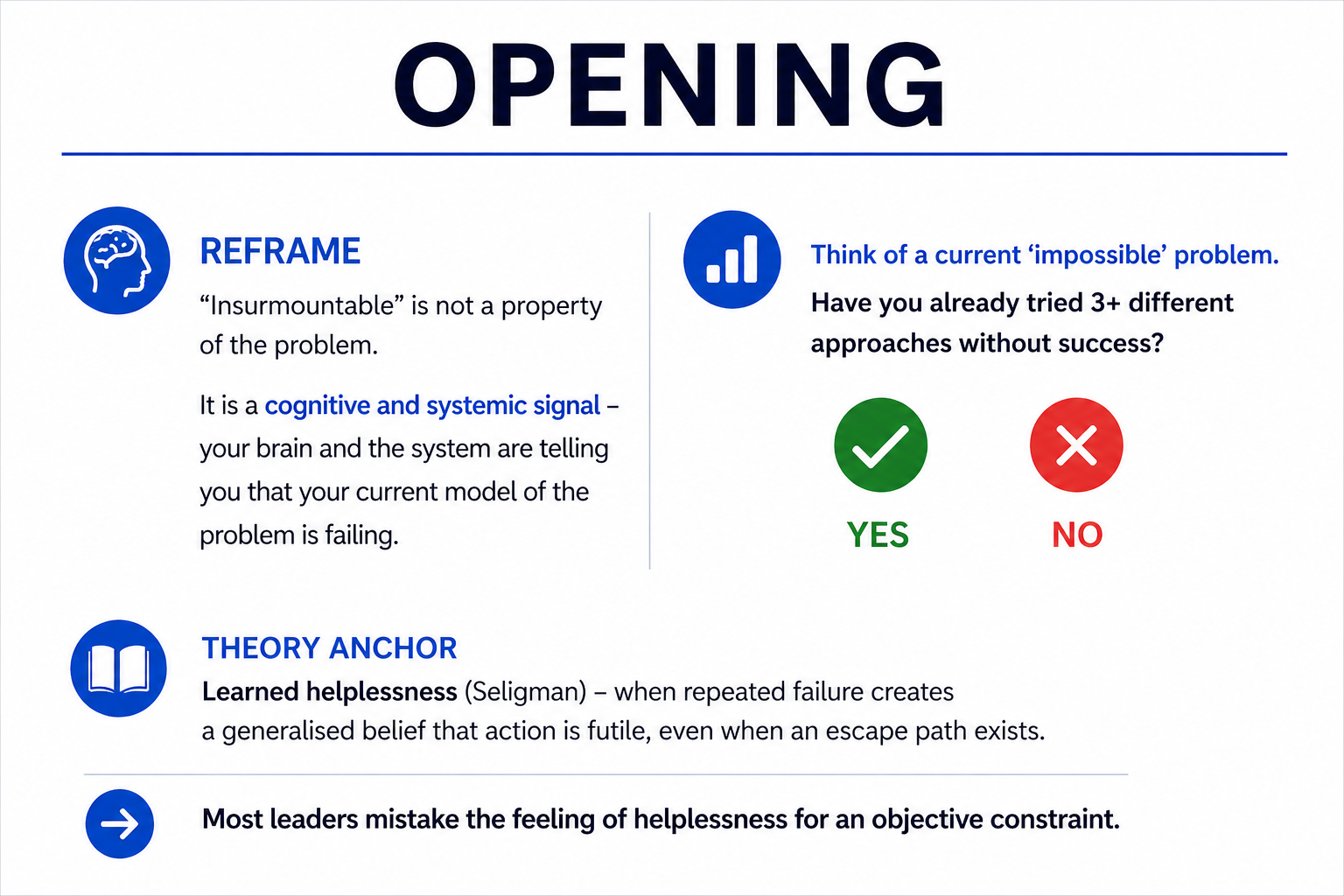
The core idea: “Insurmountable” is not a property of the problem.
It is a cognitive and systemic signal that the current way of thinking is failing
Who this is for
- Senior leaders
- Heads of function / programme
- Anyone dealing with problems that:
- don’t respond to effort
- keep reappearing
- feel stuck despite multiple attempts
What happens in the session
Over ~90 minutes:
- Leaders bring a real “stuck” problem
- We don’t try to solve it directly
- We examine how it is being framed, interpreted, and reinforced
The session moves through a structured set of shifts:
From:
- “The problem is too big”
To: - “We may be using the wrong logic”
What the session explores
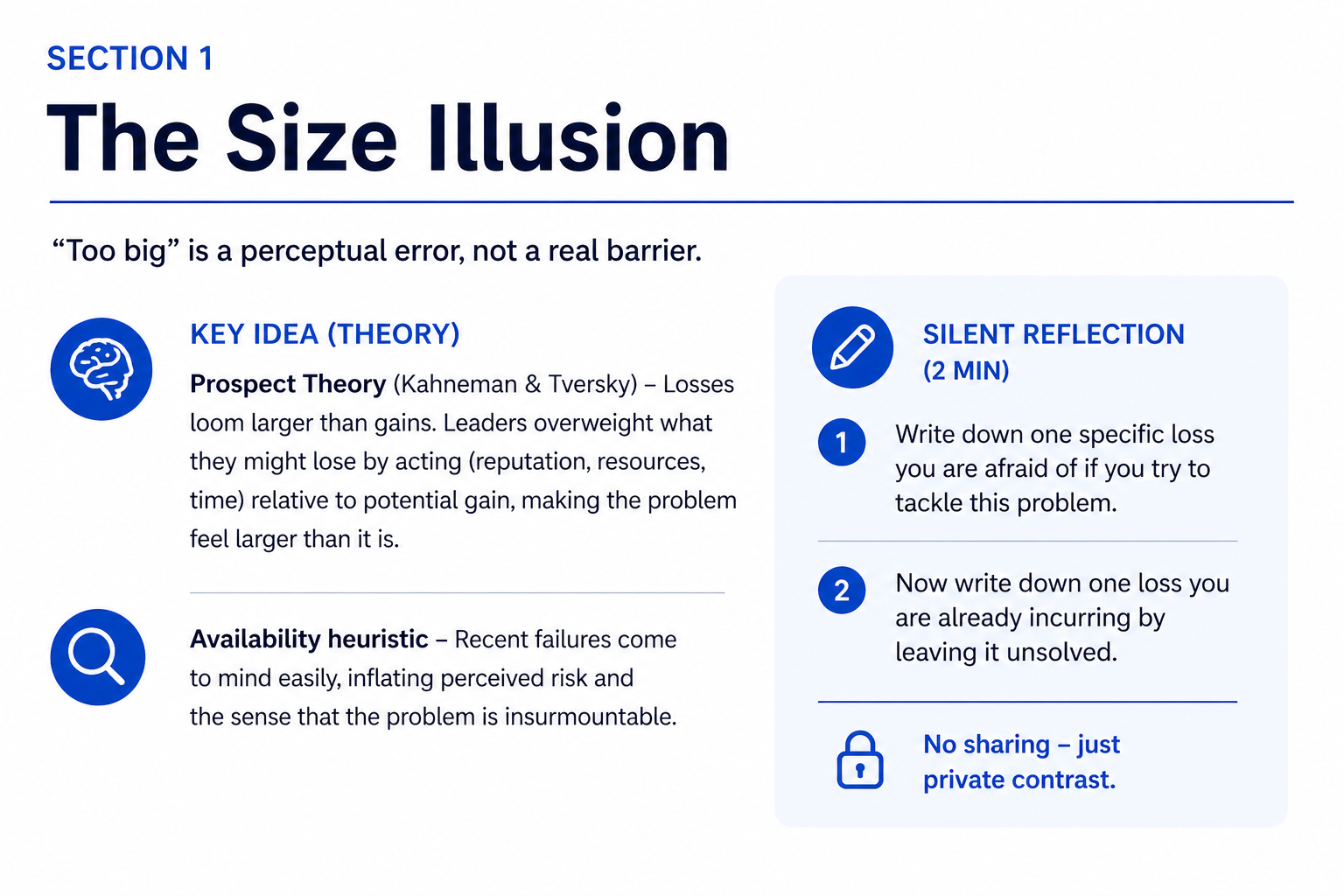
1. The Size Illusion
“Too big” is often a perceptual distortion
(Prospect theory, availability bias)
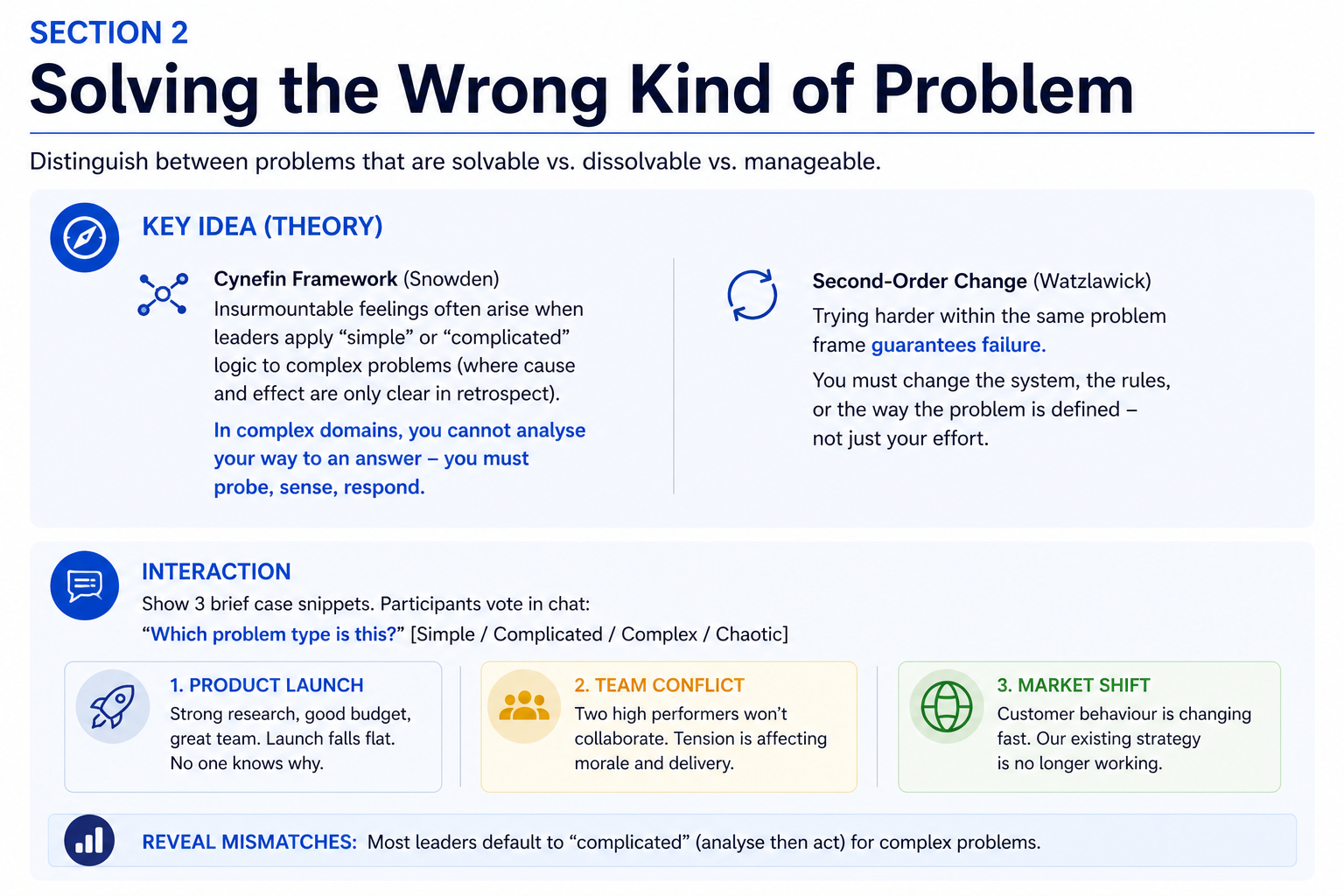
2. Solving the Wrong Kind of Problem
Leaders often apply the wrong logic to complex problems
(Cynefin, second-order change)
Trying harder within the same frame often guarantees failure
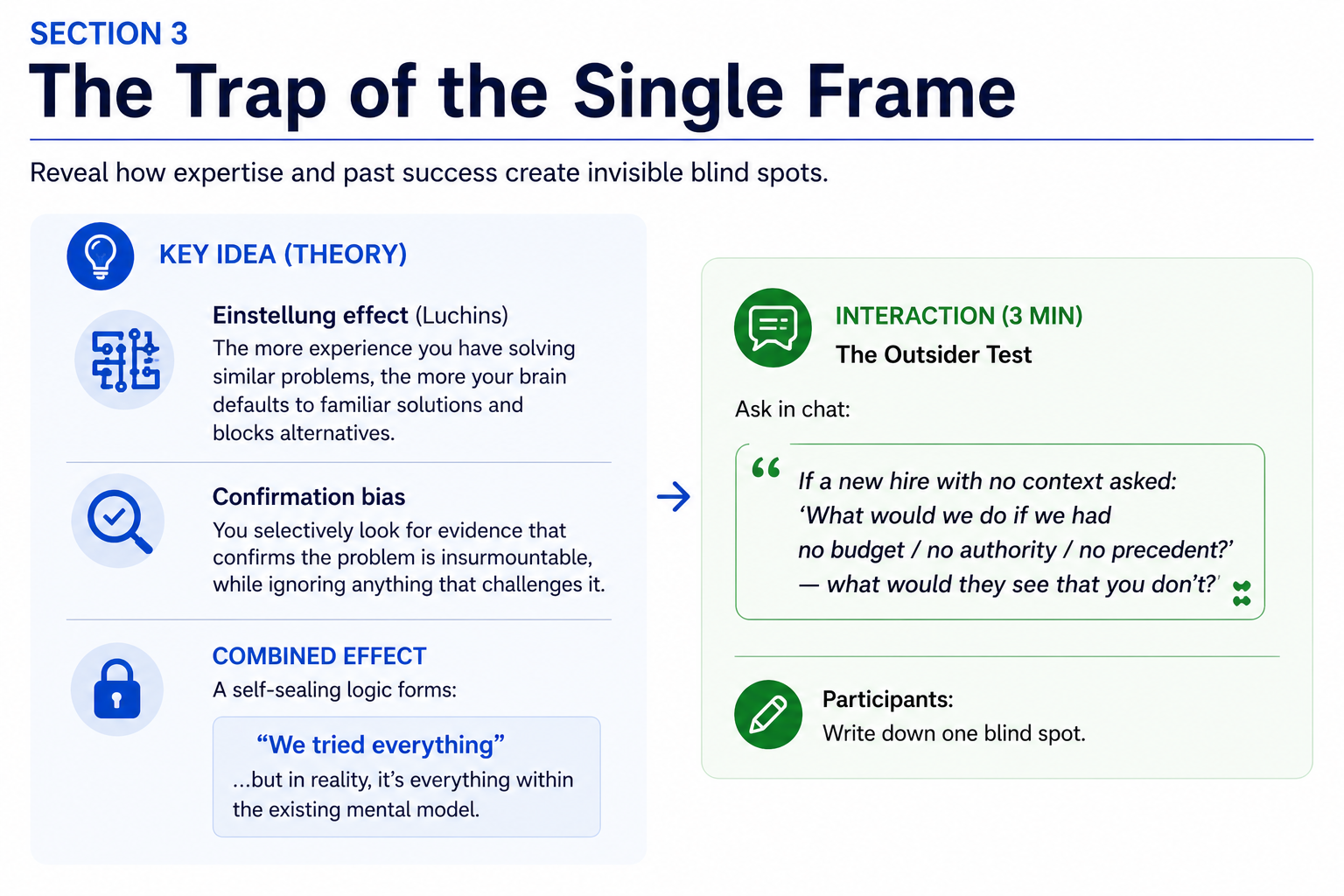
3. The Trap of the Single Frame
Experience creates blind spots
- Einstellung effect
- Confirmation bias
Result:
“We tried everything”
…within the same mental model
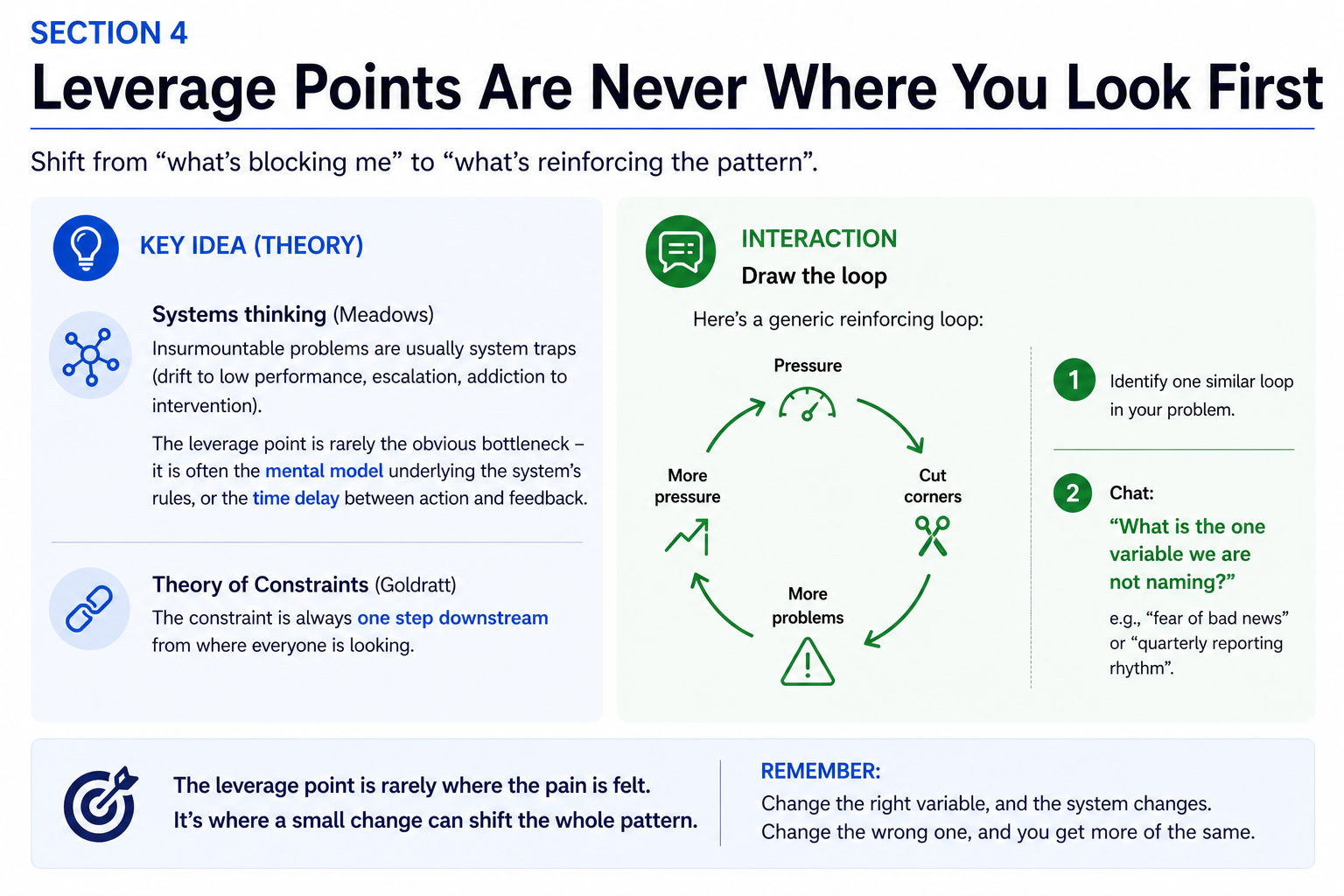
4. What Actually Drives the Problem
The issue is rarely where it appears
- Systems thinking (Meadows)
- Reinforcing loops
- Hidden constraints
You don’t fix the problem where it shows up
You fix what keeps recreating it
7. How it’s designed to work
- Less about steps, more about shifts in understanding
- Uses theory as a lens, not as an academic exercise
- Focuses on real problems leaders are already dealing with
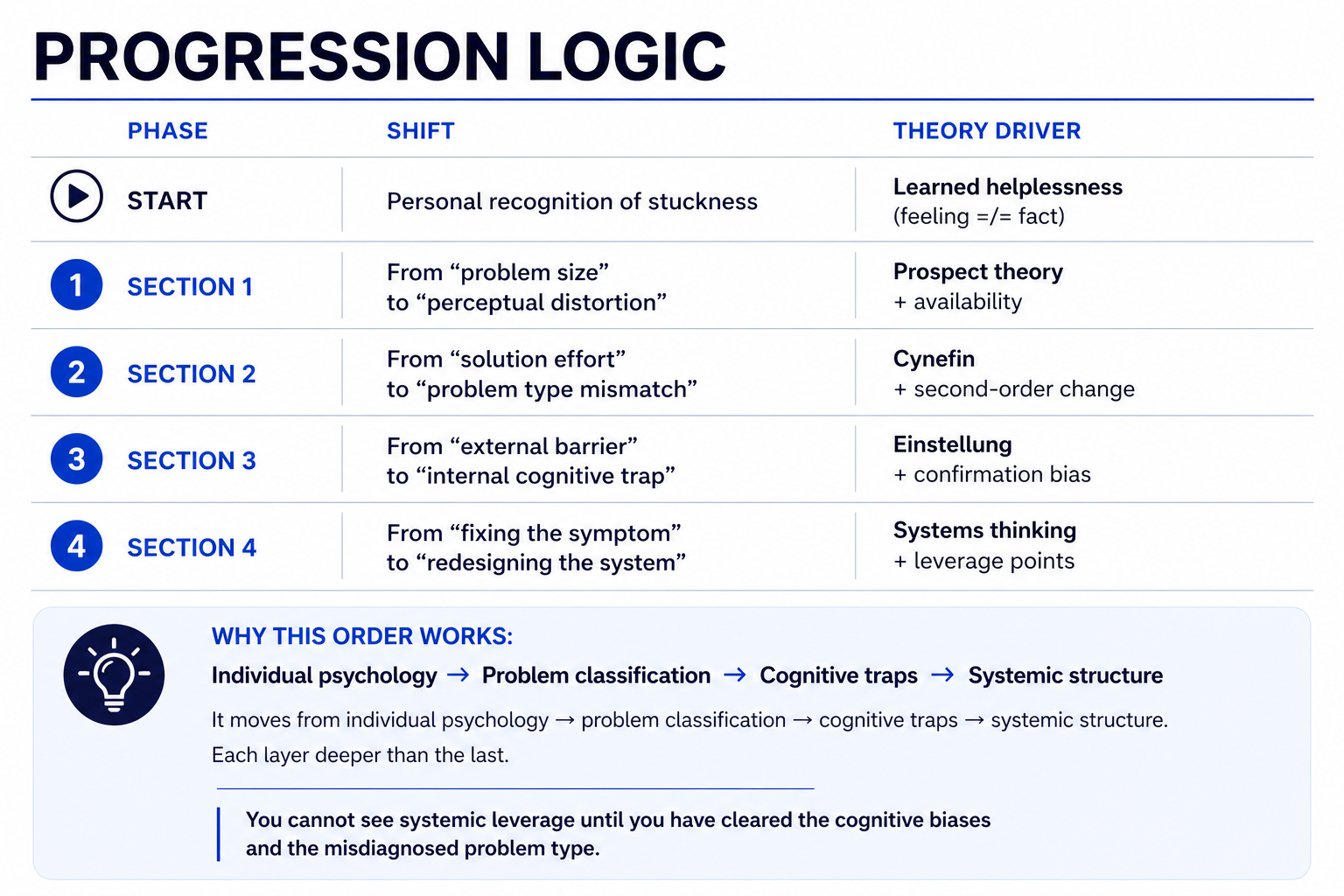
The progression is deliberate:
Psychology → Problem type → Cognitive traps → System structure
8. What leaders leave with
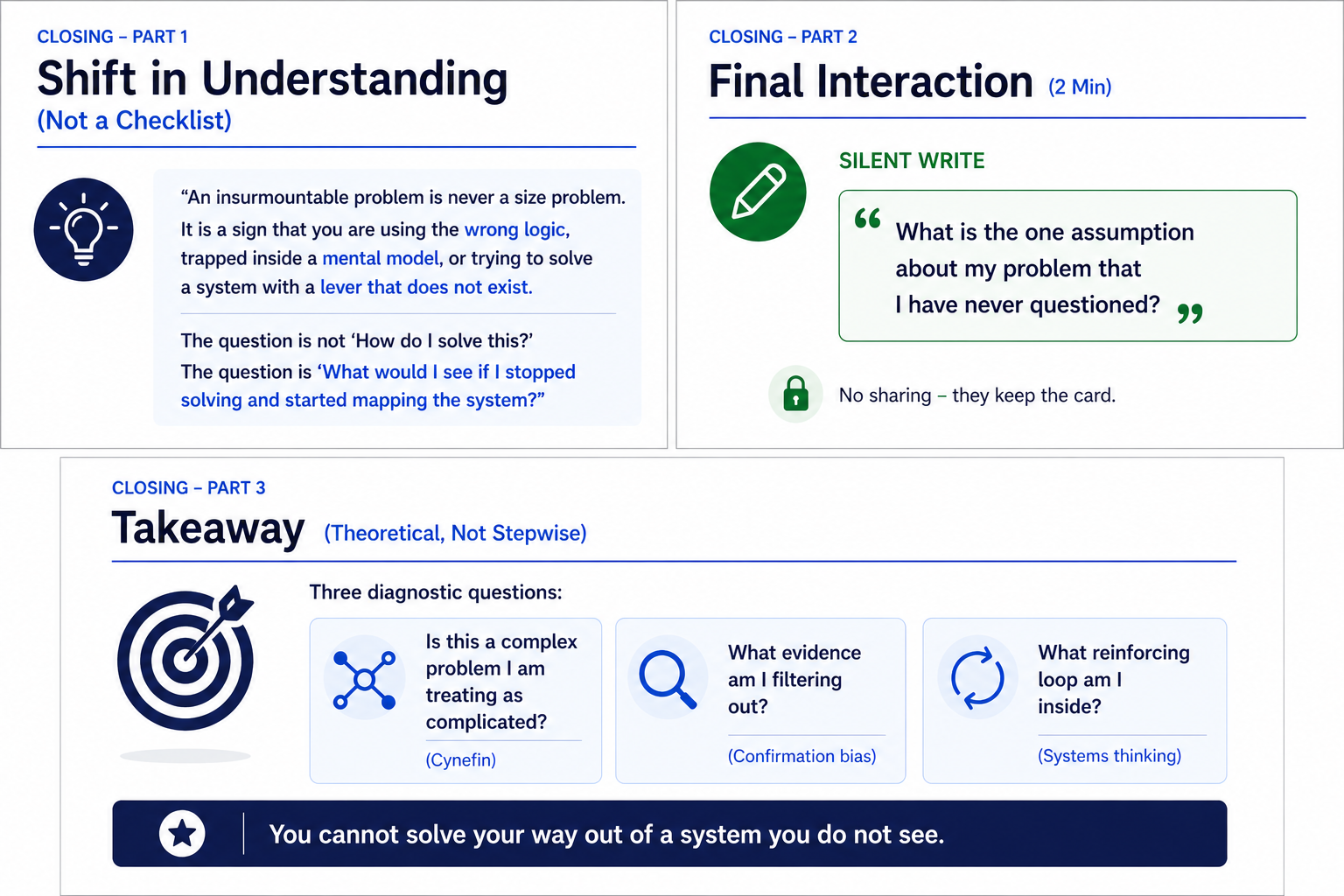
Not a checklist.
Instead:
- A reframed view of their problem
- One key assumption challenged
- A clearer sense of what not to do next
And three diagnostic questions:
- Am I treating a complex problem as complicated?
- What evidence am I filtering out?
- What reinforcing loop am I inside?
Download the leader session (PDF) here
If you’re looking for a more practical, team-level session that focuses on immediate action, there’s a simpler 4-step version here: